Star Color and the Evolution of Space on the Screen
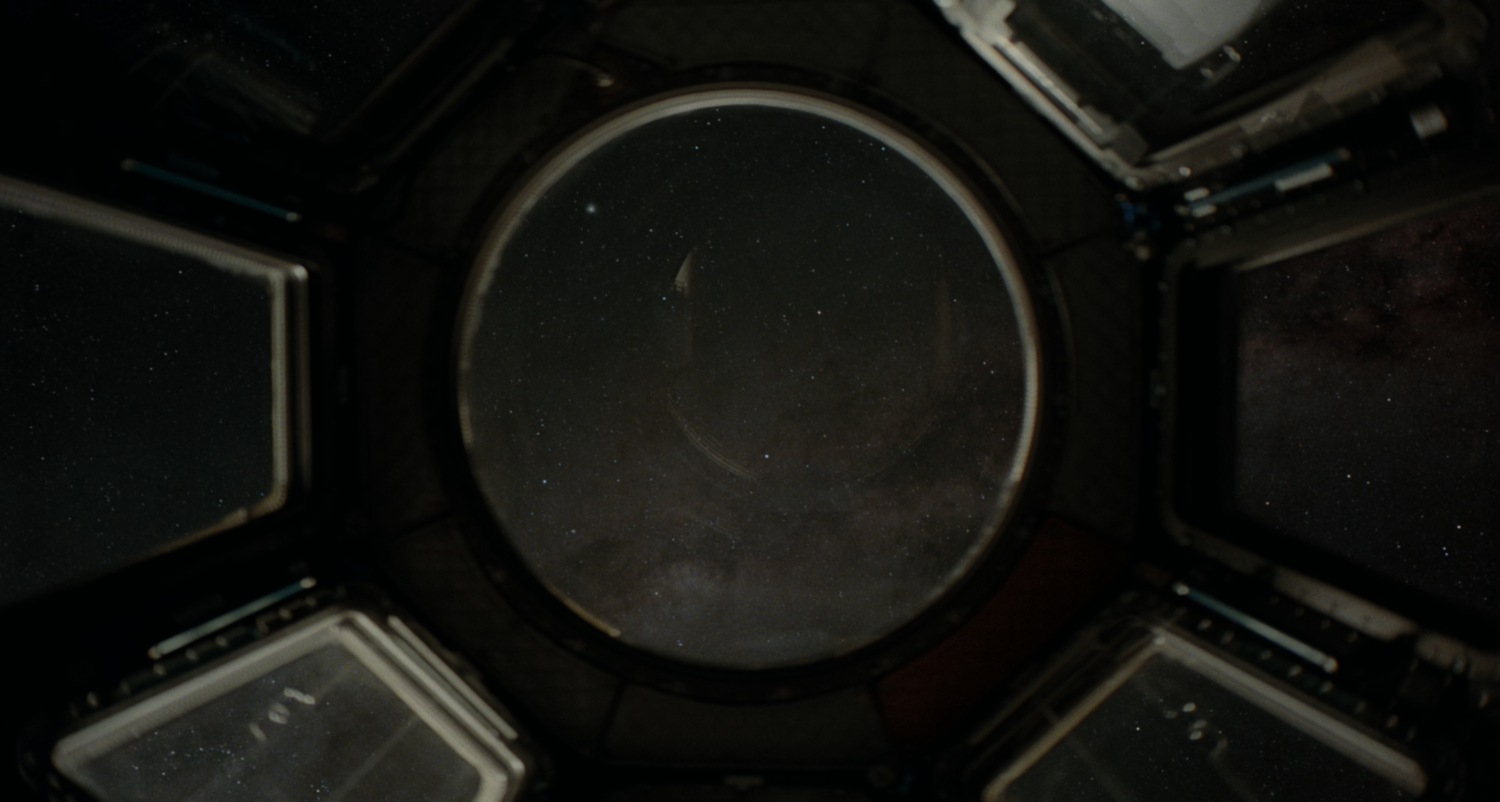
I’m still processing everything I experienced watching the theatrical release of Project Hail Mary. There are seemingly innumerable ways a big screen adaptation of Andy Weir’s masterpiece of a novel could have gone wrong, and yet they managed to succeed in all of them, including ones I did not even consider. For me, the most marvelous result of the film adaptation is that they somehow matched Weir’s diligent and obsessive scientific accuracy in their visual approach to portraying space. I do astrophotography and spend hours on each of my images obsessing over the process and I still get details wrong all of the time. I don’t think it is a controversial take that Project Hail Mary succeeded in rendering space more accurately than any movie before it. I’d like to focus on just one element of this picture: star color and the Milky Way.
Star Color
You would be forgiven if you thought that most stars were just monochromatic point lights suspended in an inky black abyss; this is how space is usually portrayed in science fiction and visual media. Stars, in fact, are brilliantly diverse ranging from deep red to saturated blue. Being black body radiators, the chromaticity of stars lie on a curve called the Planckian Locus. This is the source of the “color temperature” concept advertised on indoor lighting and used in photography. If you plot the luminosity against the effective temperature for stars you reveal a distinct structure that elucidates their lifecycle: this is called the Hertzsprung-Russell Diagram. Most stars lie along the main sequence, but depending on their mass they can end up anywhere from a white dwarf to a Red Supergiant.
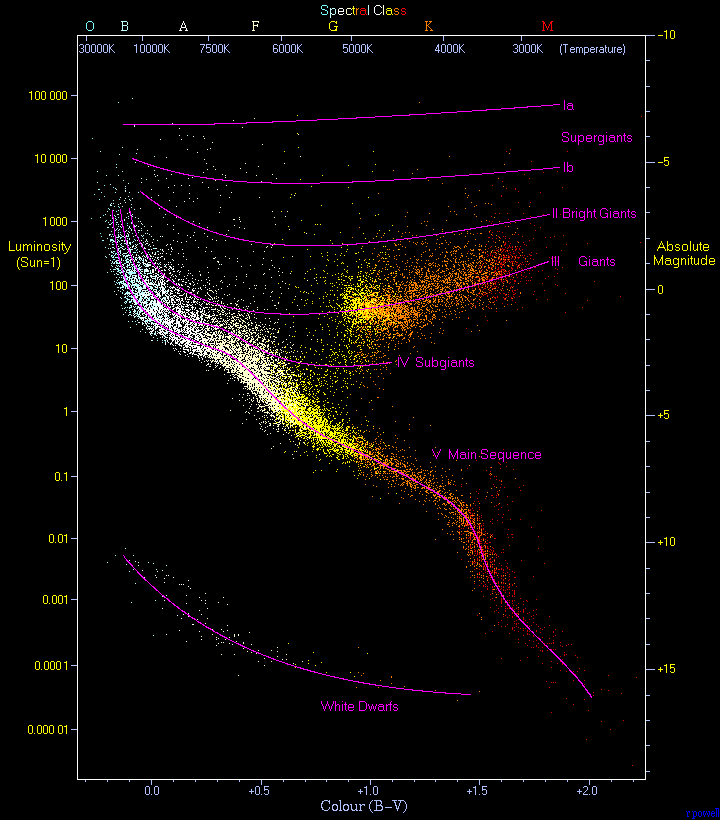
Wherever you look in the sky you will find a great diversity of stars of all colors. Why then do they seem to be mostly monochromatic when we look at them from a dark sky? The answer lies in our biology. Our retinas that render the world around us to our vision contain two classes of photoreceptors: cones and rods. Cones are responsible for color vision in the day, and rods allow us to see in low light. Unlike cones, rods trade color response for high sensitivity. As a result, dark vision is generally monochromatic. Cameras offer us an enhanced view of the night sky revealing the true color of space, and with longer exposures we learn that space itself is far from empty.
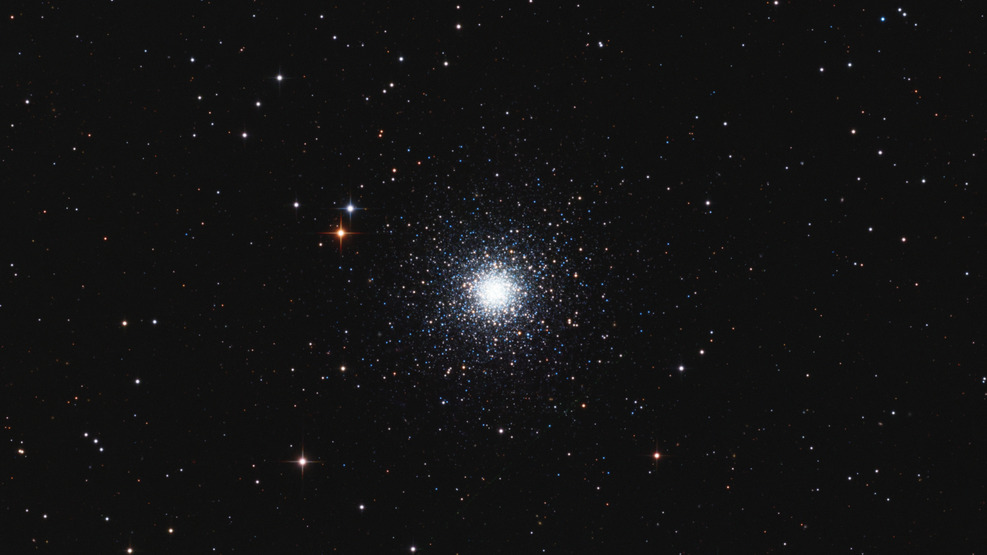 M53, a globular cluster in the Coma Berenices constellation. These dense clusters of stars are some of the oldest objects in the universe. (credit)
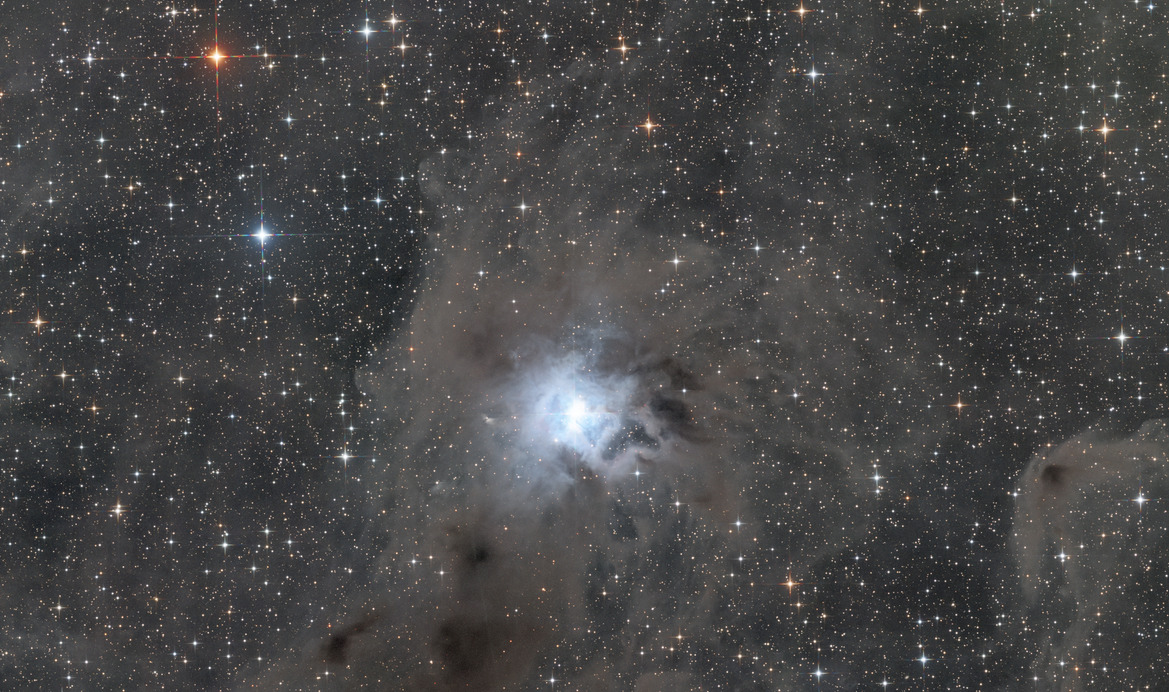 The Iris Nebula in Cepheus, a region of the vast galactic Integrated Flux Nebula that sits above our position on the galactic plane. This region of space is illuminated by the blazing light of a blue star. (credit)
Perhaps one of the most beautiful examples of star color in our night sky is the core of our Milky Way. In the Summer in the Northern hemisphere and in the Winter for the Southern hemisphere the core of our galaxy rises overhead at night and reveals an incomprehensible density of gold dust stars, interstellar dust, and vibrant nebulae.
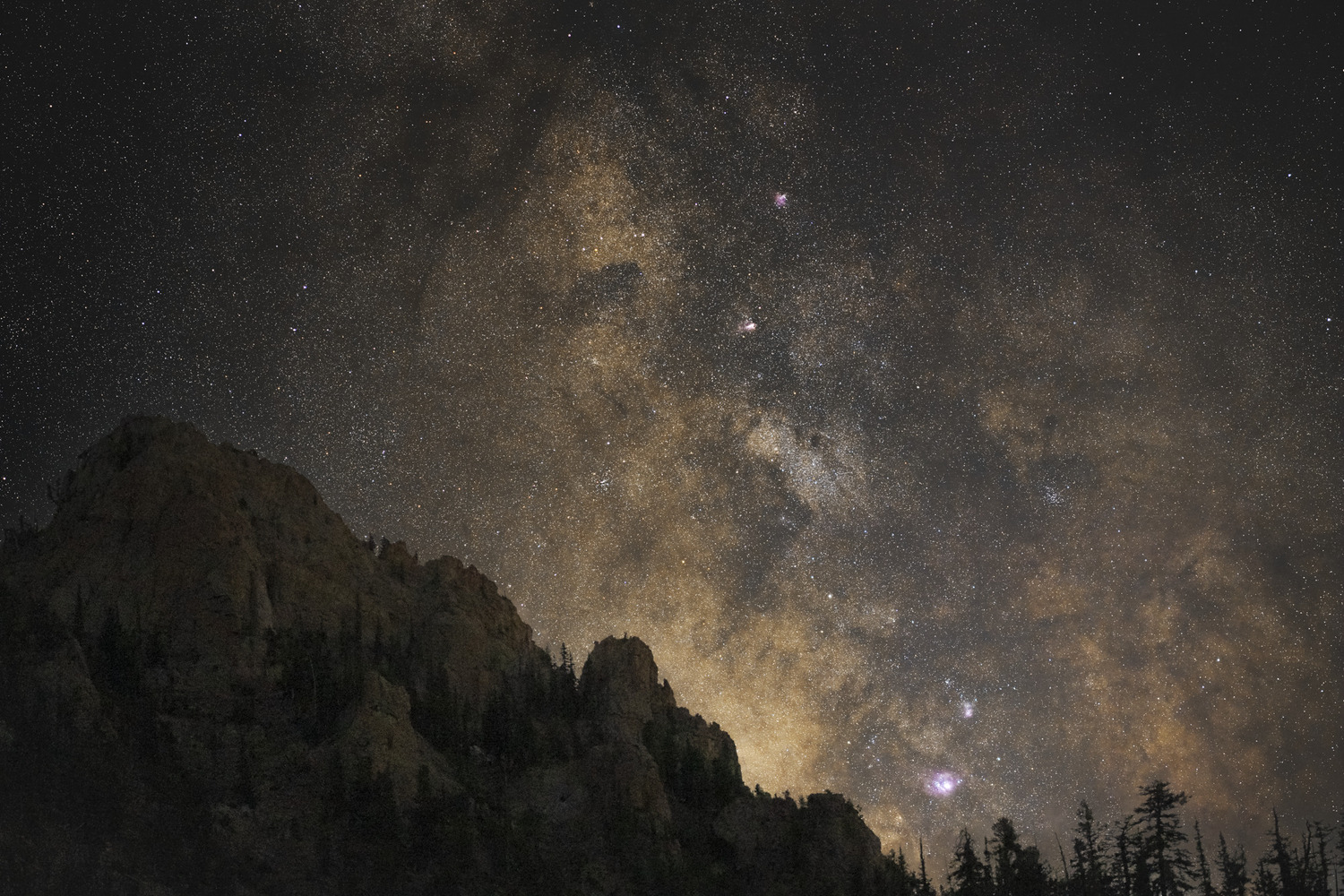 I took this image on a backpacking trip in Utah in early Summer. The seeing that night was good enough to see detail in the dust lanes in the Milky Way and for this one minute exposure to reveal the golden color and even the Lagoon, Trifid, and Eagle nebulae looking into the core of our galaxy.
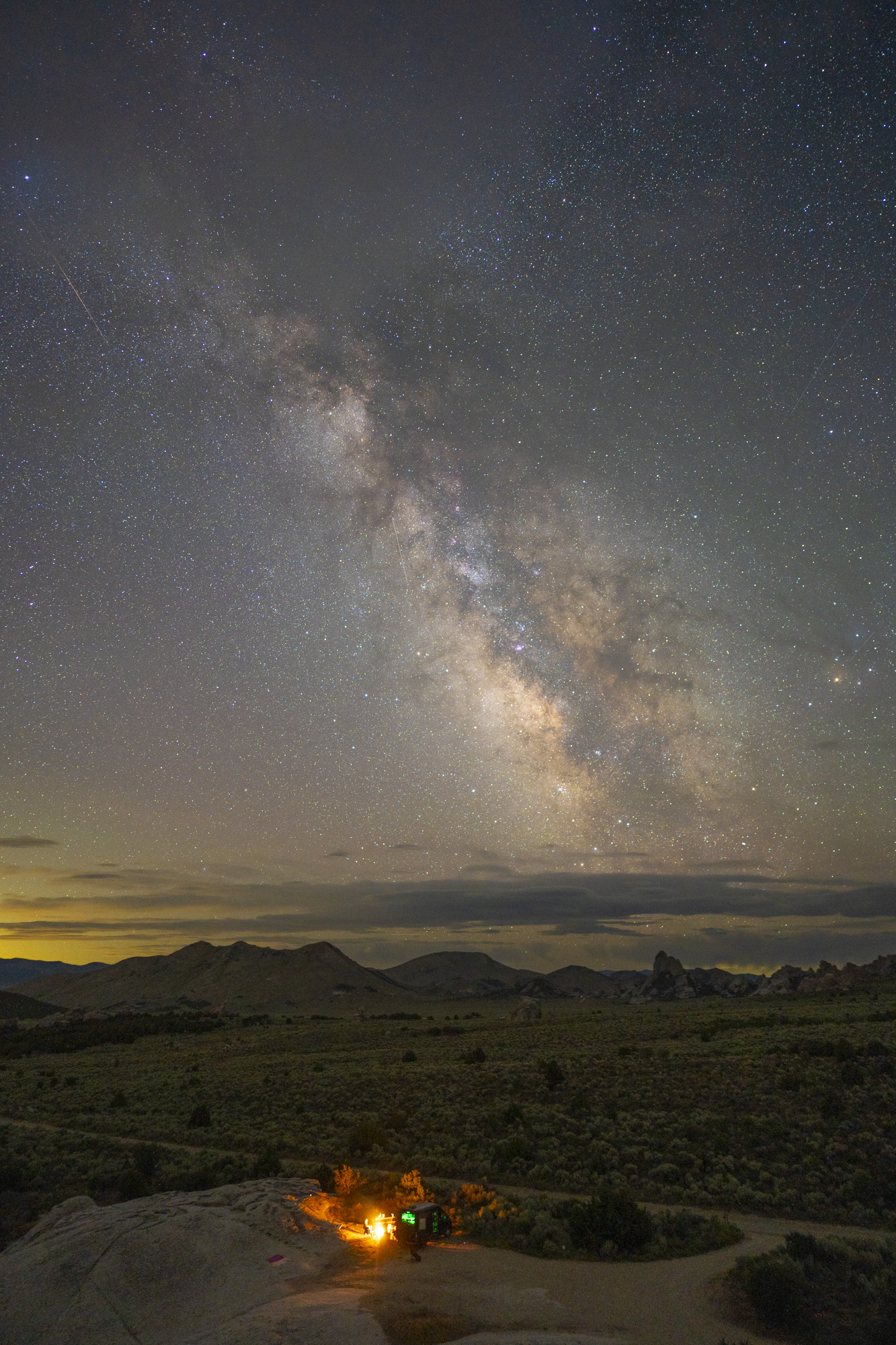 This image comes from the City of Rocks in Idaho, a beautiful natural preserve where you can go to appreciate the night sky unimpeded by the light pollution of large cities. To the right of the core of the Milky Way you can see the Rho Ophiuchi Cloud Complex containing the intensely orange star Antares and a region of dark dust that will show up even with phone photography.
Factors like light pollution, sky glow, zodiacal light (the glow of dust on the plane of our solar system), and the chromatic aberration of the lens will influence the colors rendered in many captures of the Milky Way. This has unfortunately produced a public perception of the Milky Way as being purple, green, blue, or even monochromatic. I’ve done a fair amount of color correction to help render the accurate colors of the sky in these images, but there are still some problems (you can notice the blue/purple stars in the top of the second image). Even with these smaller details, these images render the color of our sky far more honestly than all media I have seen up until this point in my life.
The Sky in Media
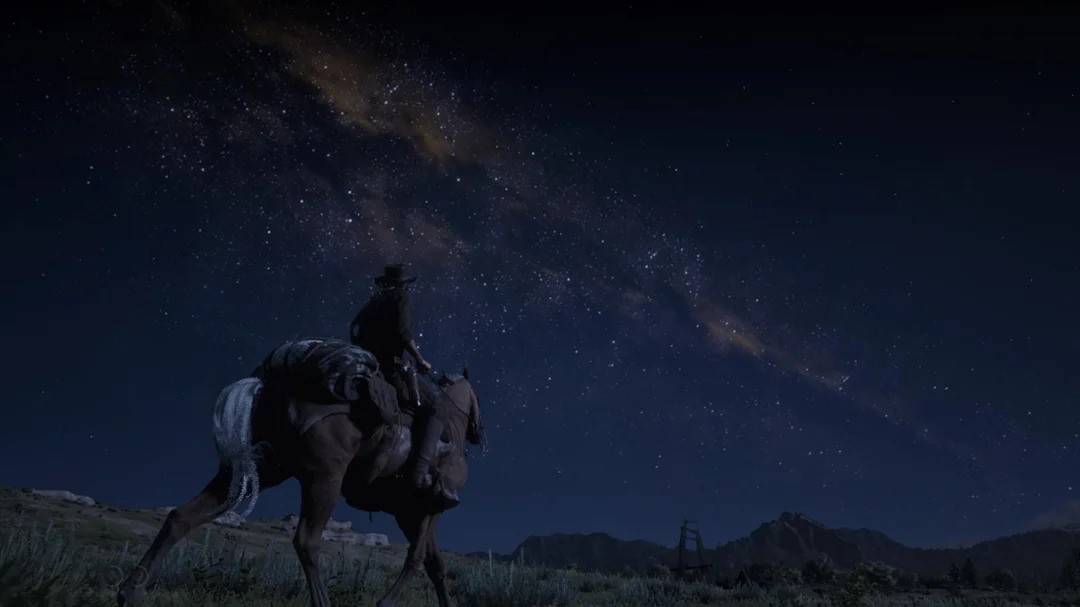
Red Dead Redemption 2, while having perhaps the most accurate night sky box of any video game yet produced, still demonstrates a common error of portraying the Milky Way as brown with monochromatic stars. Another common error in artistically rendering the night sky also involves portraying the dense galactic core as a blob and bright stars as a separate foreground element.
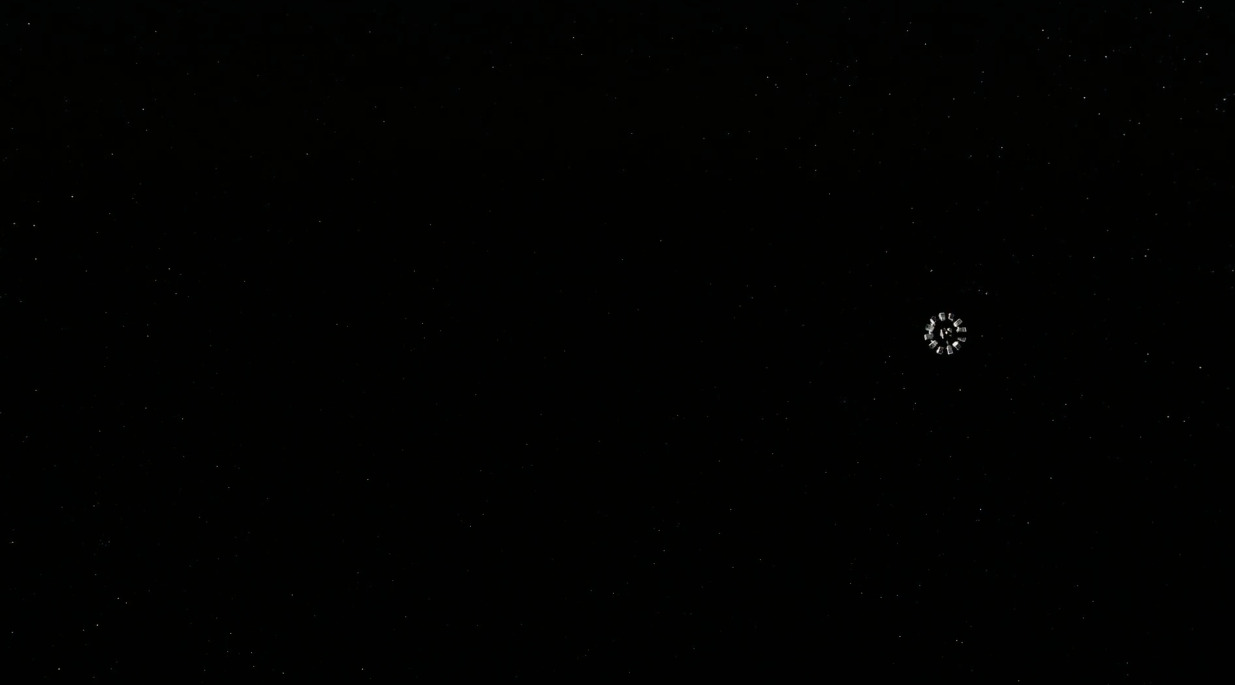
Interstellar was a monumental work in science fiction but often portrays space as empty with a dearth of stars. Astrophotography is featured in the film, but often with contrast so intense that backgrounds are totally black and the color is all but gone in any of the space backgrounds.
The Martian also sadly portrays space as dark and empty, despite having an abundance of scientific accuracy in other parts of the film.
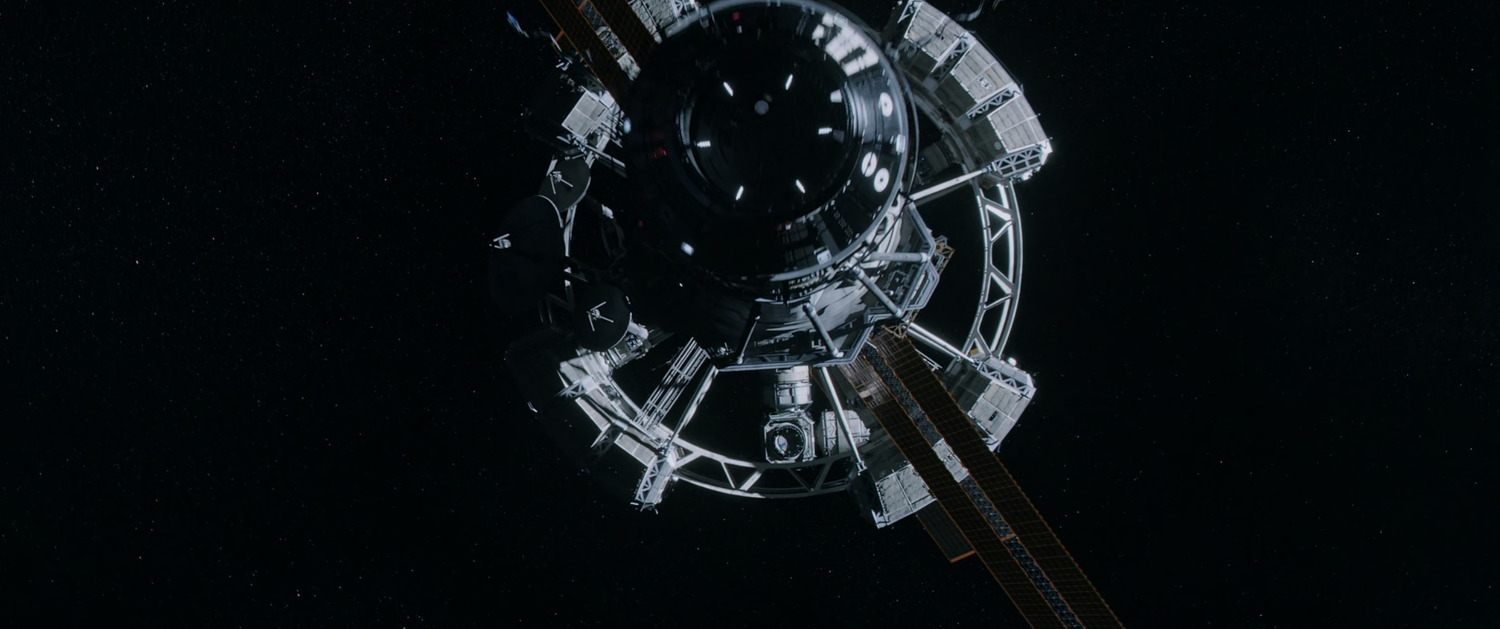
A New Frontier
I want to focus on one scene in Project Hail Mary, which fortunately avoids spoilers as it takes place in the first five minutes of the film. Grace wakes up aboard the Hail Mary from a coma with no memory of how he got here and quickly comes to grips with the gravity of his situation with this stunning shot looking into the galactic plane out of the window:
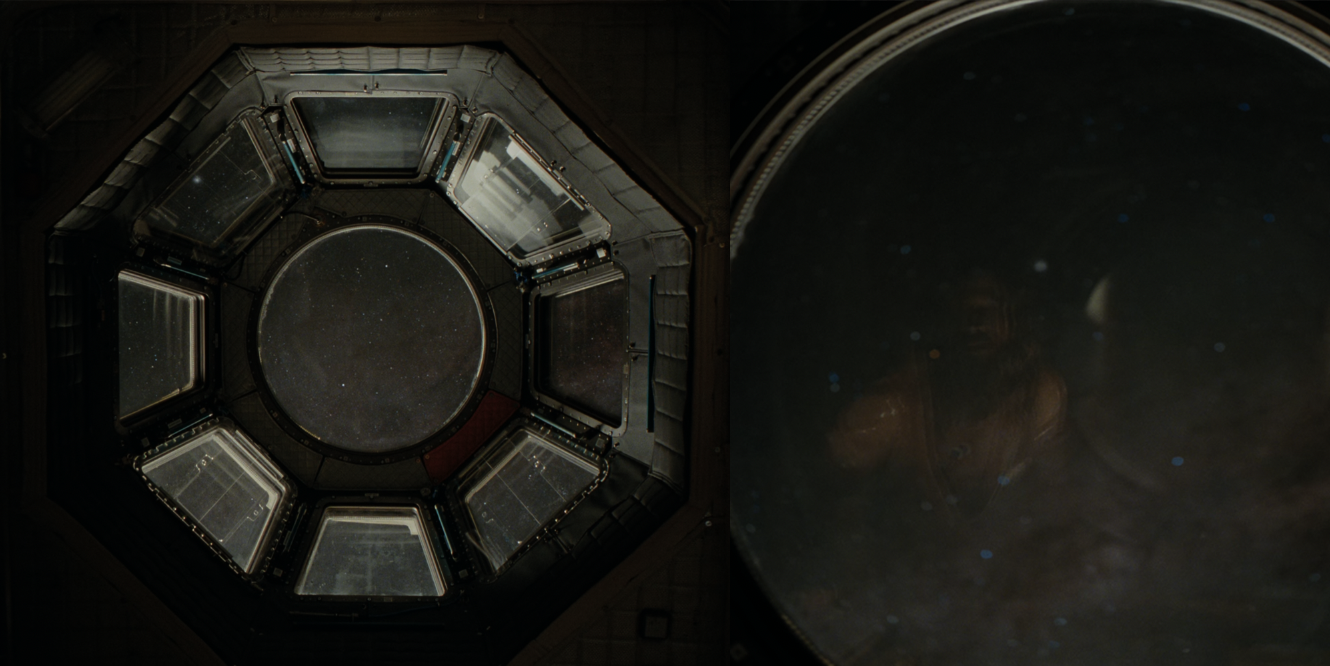
I think that this shot alone changes science fiction forever. Not only is the color of the Milky Way and stars accurate, somehow they managed to accurately capture the bokeh shape of defocused stars. I think I can also see distortion from the spherical window itself, an effect that would be rendered from the set existing in the light path in addition to the camera. This is an incredibly difficult effect to fake effectively, so I have to conjecture that they must have shot the background in-camera possibly from a Southern hemisphere location given the region of space depicted in the shot. They may have even constructed a replica of the window set and racked focus to match the in-ship shot.
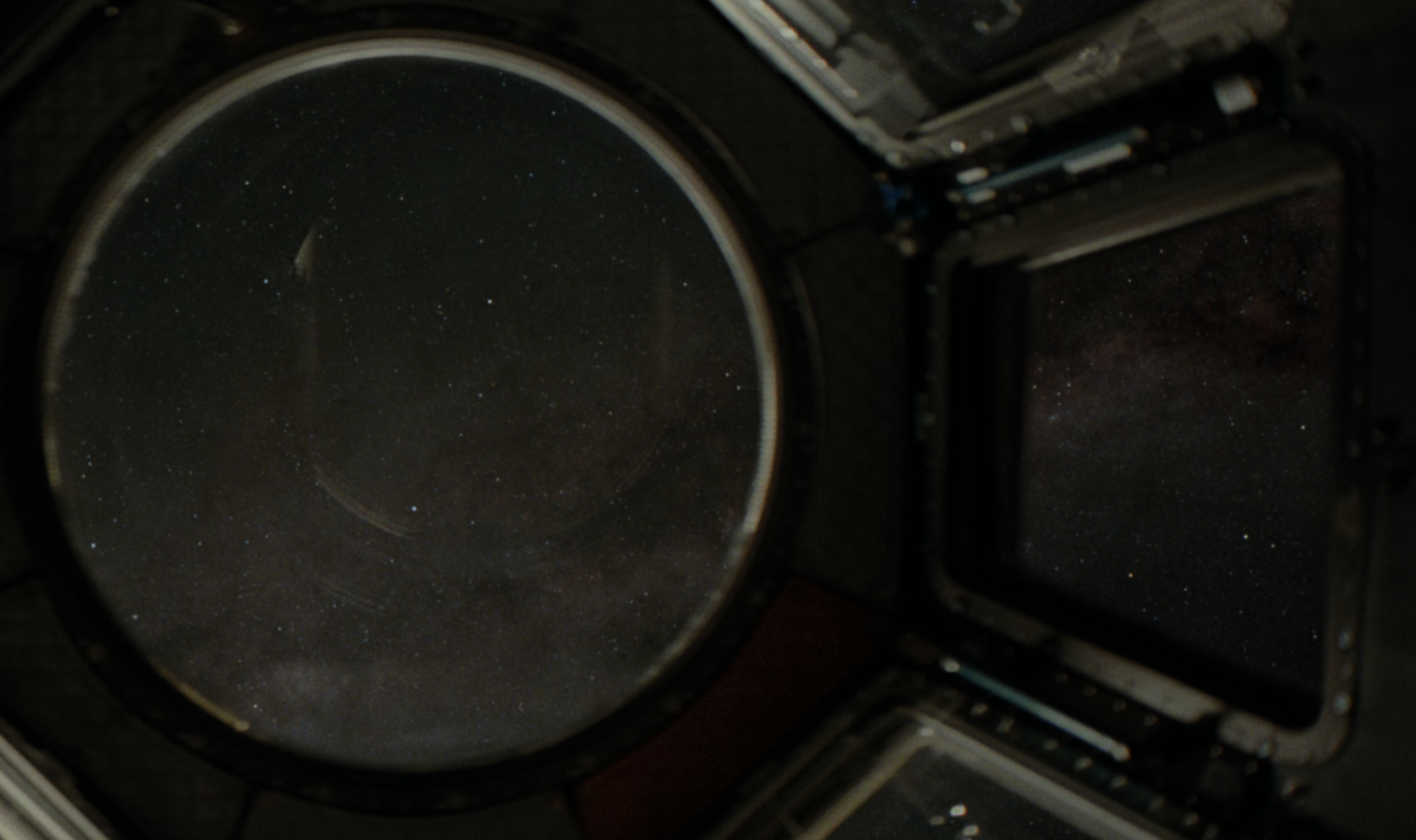
Cameras normally attenuate most of the light emitted by Hydrogen nebula with their IR block filters. If the camera used to film this shot was modified to allow for the Hydrogen alpha band of spectrum to be recorded by the sensor, you would see even more detail in these pink regions of space. I don’t think this is an error, however. Our eyes are much more sensitive to green than any other color, and our eyes barely pick up the Hydrogen alpha band and instead mostly register the dimmer but bluer beta emission of Hydrogen gas.
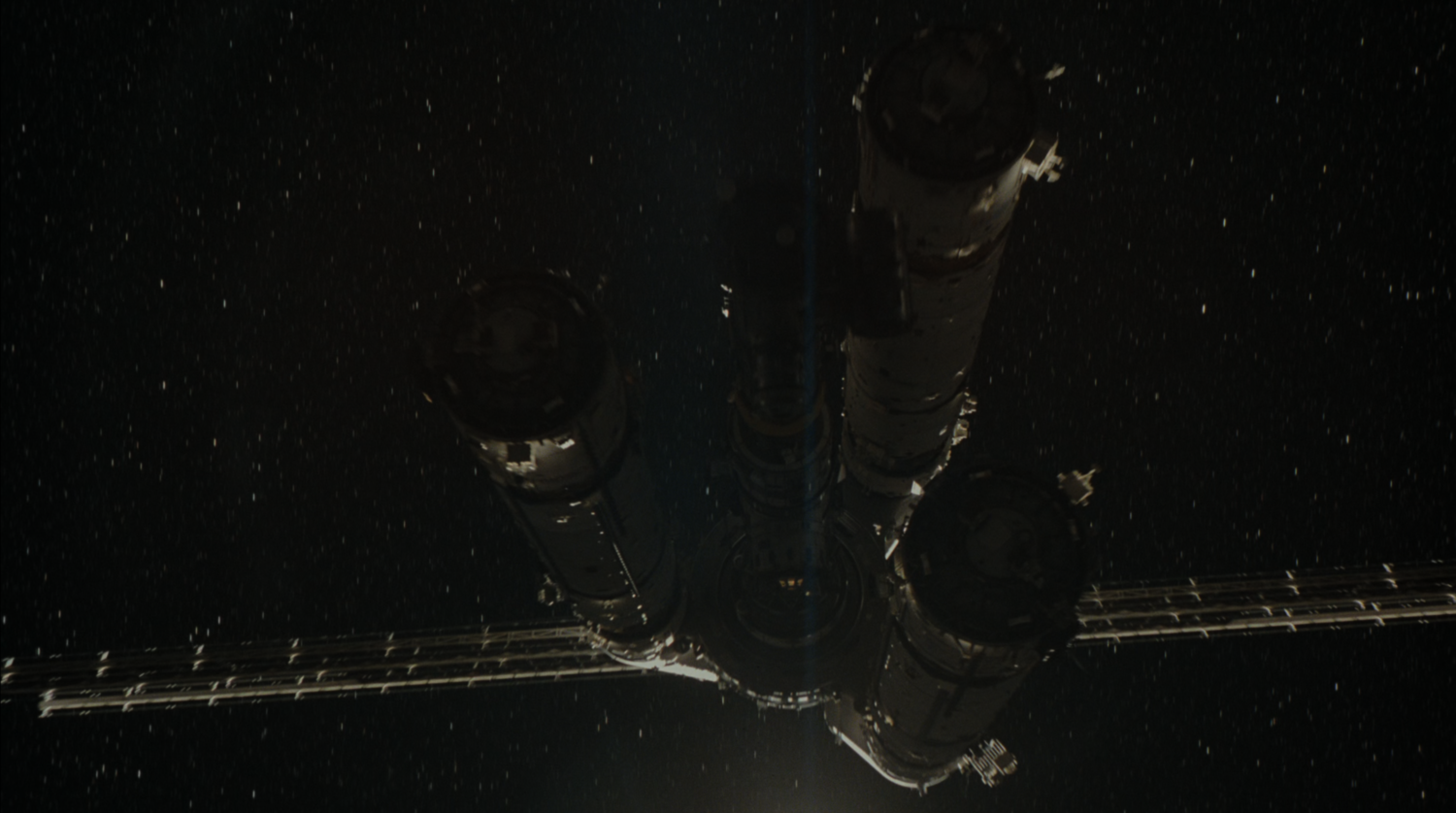
The shot immediately afterwards uses a different lens that itself has a fair amount of chromatic aberration and coma, but that still renders the star color and density of star fields in space. You’ll also notice that they have maintained a black point that is not totally zero which reveals hints of structure in the cosmos that truly exist.
A Beautiful Future
The overarching theme of Project Hail Mary is one of hope. Where other movies chose cool and dark color grading for space, Hail Mary preferred warm color balances with abundant earth tones that are far more faithful to what space actually looks and feels like. This film not only gave me hope from its themes, but also hope for science fiction to learn from everything that it did right. Interstellar was known for its collaboration with scientists in an accurate depiction of a black hole that forever changed the public perception of space and its portrayal in media. I hope that Project Hail Mary serves as a template for future films proving that success can come from care for the details, a love for the craft of film, and a desire to represent the beauty of the natural world on and off of Earth.
If you haven’t seen Project Hail Mary yet, please go watch it. I have seen it twice in theaters and have friends who have seen it four times. It is out on streaming services now and available for Blu-ray later this year. And, if you are reading this and had any hand in the gorgeous space cinematography: I owe you a beer. Thank you for making me cry and filling me with joy seeing the most faithful and exciting depiction of space I have ever seen on the big screen.

This work is licensed under a Creative Commons Attribution-NonCommercial-ShareAlike 4.0 International License.